The Silkland 54Gbps 16K DisplayPort Cable 2.1 review comes down to matching its long reach and high-resolution support to the actual DisplayPort capabilities of your monitor and graphics card.
It is a male-to-male, 10-foot cable aimed at gaming and multi-display setups where a flexible cable run matters as much as headline bandwidth.
Silkland DP Cable Review Summary
The quick verdict
7,000+ ratings
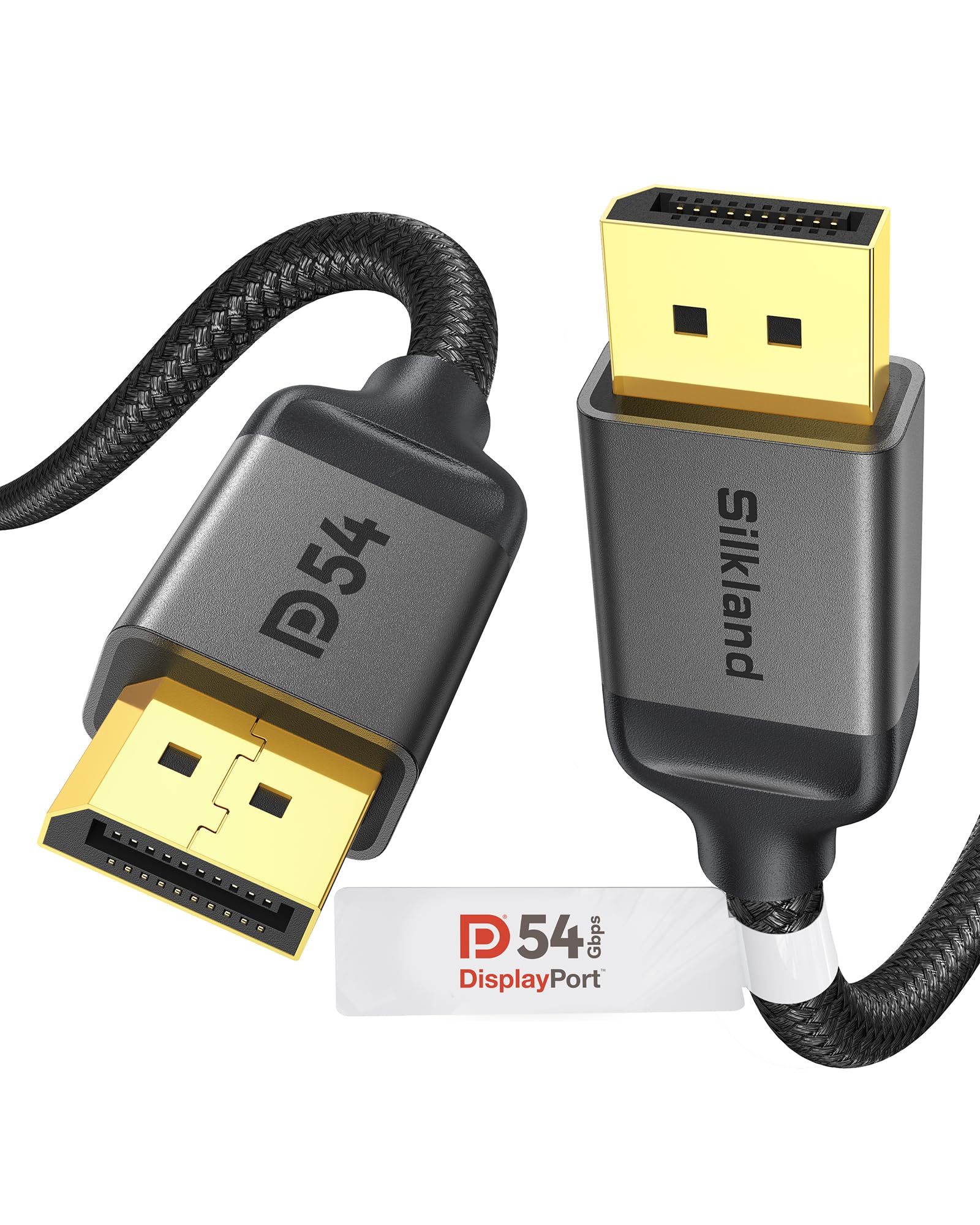
Read Amazon ReviewsSilkland 16K DisplayPort Cable
A 10-foot DisplayPort cable for desktop users connecting compatible high-resolution monitors and graphics cards, with a braided build and broad backward compatibility.
- 10-foot, male-to-male DisplayPort cable for connecting a compatible desktop or laptop to a monitor.
- Supports up to 16K (15360 × 8640) at 60Hz with DSC, 8K at 120Hz, 4K at up to 240Hz, and 2K at 360Hz.
- Lists 54Gbps bandwidth, HBR3, DSC 1.2a, Dynamic HDR, HDCP 2.2, and 3D stereo support.
- Backward compatible with DisplayPort versions 2.0, 1.4, 1.3, 1.2, 1.2a, 1.1, and 1.0.

Pros
- A 10-foot length helps accommodate a wider gap between the computer and display.
- Broad backward compatibility suits mixed-generation DisplayPort equipment.
Consider before buying
- The cable’s high-end modes rely on the connected display and graphics hardware supporting the required resolution, refresh rate, and DSC features.
- A 10-foot cable may leave excess slack on a compact desk, so measure the route before choosing it.
Read the full review summary
This cable combines a 10-foot length with support for DisplayPort 2.1/2.0 and earlier versions, making it useful when a computer and monitor are not positioned close together.
Its listed modes extend up to 16K at 60Hz with DSC, alongside 8K at 120Hz, 4K at up to 240Hz, and 2K at 360Hz; reaching any of those modes depends on the connected devices and setup.
The practical draw is a mix of reach, backward compatibility, and a braided, shielded construction.
Buyers should check the resolution and refresh rate they intend to use, along with each device’s DisplayPort version and support for DSC where needed. The cable’s capabilities alone cannot upgrade a display or graphics card.
The buying factors
Silkland DP Cable Scorecard
Editorial scores reflect listed features and buyer fit; they are not laboratory measurements or customer ratings.
Resolution and refresh range
The listed modes cover demanding high-resolution and high-refresh use, with 16K at 60Hz specified with DSC.
Cable reach
At 10 feet, it offers more placement flexibility than a short desk cable, though that extra length can leave slack in a compact setup.
Compatibility range
It supports DisplayPort versions from 1.0 through 2.1/2.0 and lists compatibility with common monitor and graphics-card setups.
Build and handling
The braided exterior, triple shielding, tinned copper conductors, and buckle-free connector design are useful construction details.
Setup flexibility
The cable supports MST and adaptive-sync technologies, which can suit multi-display and variable-refresh setups when the connected hardware supports them.
Buyer clarity
The wide range of advertised modes requires a careful check of device capabilities and DSC support before purchase.
Key Features and Specifications of Silkland DP Cable
- 10-foot, male-to-male DisplayPort cable for connecting a compatible desktop or laptop to a monitor.
- Supports up to 16K (15360 × 8640) at 60Hz with DSC, 8K at 120Hz, 4K at up to 240Hz, and 2K at 360Hz.
- Lists 54Gbps bandwidth, HBR3, DSC 1.2a, Dynamic HDR, HDCP 2.2, and 3D stereo support.
- Backward compatible with DisplayPort versions 2.0, 1.4, 1.3, 1.2, 1.2a, 1.1, and 1.0.
- Supports multi-stream transmission and audio pass-through for uncompressed 7.1, 5.1, and 2.0 channels.
- Uses 28AWG tinned copper conductors, triple shielding, a double nylon braid, and 24K gold-plated connectors.
- Buckle-free connector design with grooves intended to make gripping and removal easier in tight spaces.
Pros and Cons of Silkland DP Cable
Pros
- A 10-foot length helps accommodate a wider gap between the computer and display.
- Broad backward compatibility suits mixed-generation DisplayPort equipment.
- The listed resolution and refresh modes cover several demanding display configurations, subject to device support.
- Braided construction, triple shielding, and grooved, buckle-free connectors provide practical design details.
Consider before buying
- The cable’s high-end modes rely on the connected display and graphics hardware supporting the required resolution, refresh rate, and DSC features.
- A 10-foot cable may leave excess slack on a compact desk, so measure the route before choosing it.
- The cable is DisplayPort to DisplayPort, so it will not directly connect to a device that lacks a compatible DisplayPort port.
Who Should Buy Silkland DP Cable?
Good fit
Consider the Silkland DP Cable if your computer and monitor both have DisplayPort connections and you need a 10-foot run.
Its listed backward compatibility is useful for setups that do not use the newest DisplayPort generation, while the higher-resolution modes leave room for compatible equipment.
Before buying, identify the display mode you plan to use and verify that both ends support it.
For the listed 16K mode, check DSC support specifically; for high refresh rates, confirm that the monitor and graphics card can produce the selected resolution and refresh rate together.
The braided jacket and grooved connector design may suit a cable routed around a desk or into a less accessible port.
Measure the route and allow for the connector approach and any slack you want, rather than choosing length by endpoint distance alone.
Who should skip it
Skip this model if your devices connect through a different port type and you need a direct cable between unlike connectors.
Also reconsider the 10-foot length if your equipment sits side by side and a long cable would be difficult to route neatly.
If you are choosing it specifically for a maximum resolution or refresh rate, first confirm that both devices support the required mode and any compression feature involved.
The cable cannot supply capabilities that the display or graphics card does not have.
How the Silkland DP Cable Fits a High-Resolution Setup
Match the cable’s modes to both devices
The range of listed display modes is useful as a compatibility target, but the result depends on the full connection: the computer’s graphics output, the monitor’s input, and the selected settings.
The 16K-at-60Hz figure explicitly uses DSC, so buyers aiming for that mode should verify DSC support throughout their setup rather than relying on the cable specification alone.
Use the 10-foot reach deliberately
Ten feet can make it easier to place a monitor away from a desktop tower or route a cable behind furniture. The tradeoff is simple: extra length needs somewhere to go.
Measure the actual route, including bends and how the cable reaches each port, and decide whether the added reach is helpful in your room.
Consider the connector and jacket in the route
The cable has a double nylon braid and a buckle-free plug with grooves for gripping. Those choices may be convenient when a port sits close to a wall or other equipment.
If the connection will be difficult to reach, check the available space around the port and make sure you can insert and remove the connector comfortably.
Plan around audio and multiple displays
The product lists uncompressed audio pass-through and multi-stream transmission, giving it potential use in setups that carry audio over DisplayPort or connect multiple displays.
These features still depend on compatible source and display hardware, so confirm that your intended configuration supports the required audio or multi-stream function.
Alternatives to Silkland DP Cable
One relevant alternative is included because it offers a distinct bandwidth and length tradeoff for DisplayPort 2.1 setups.
Computer DisplayPort Cables alternative
2,000+ ratings
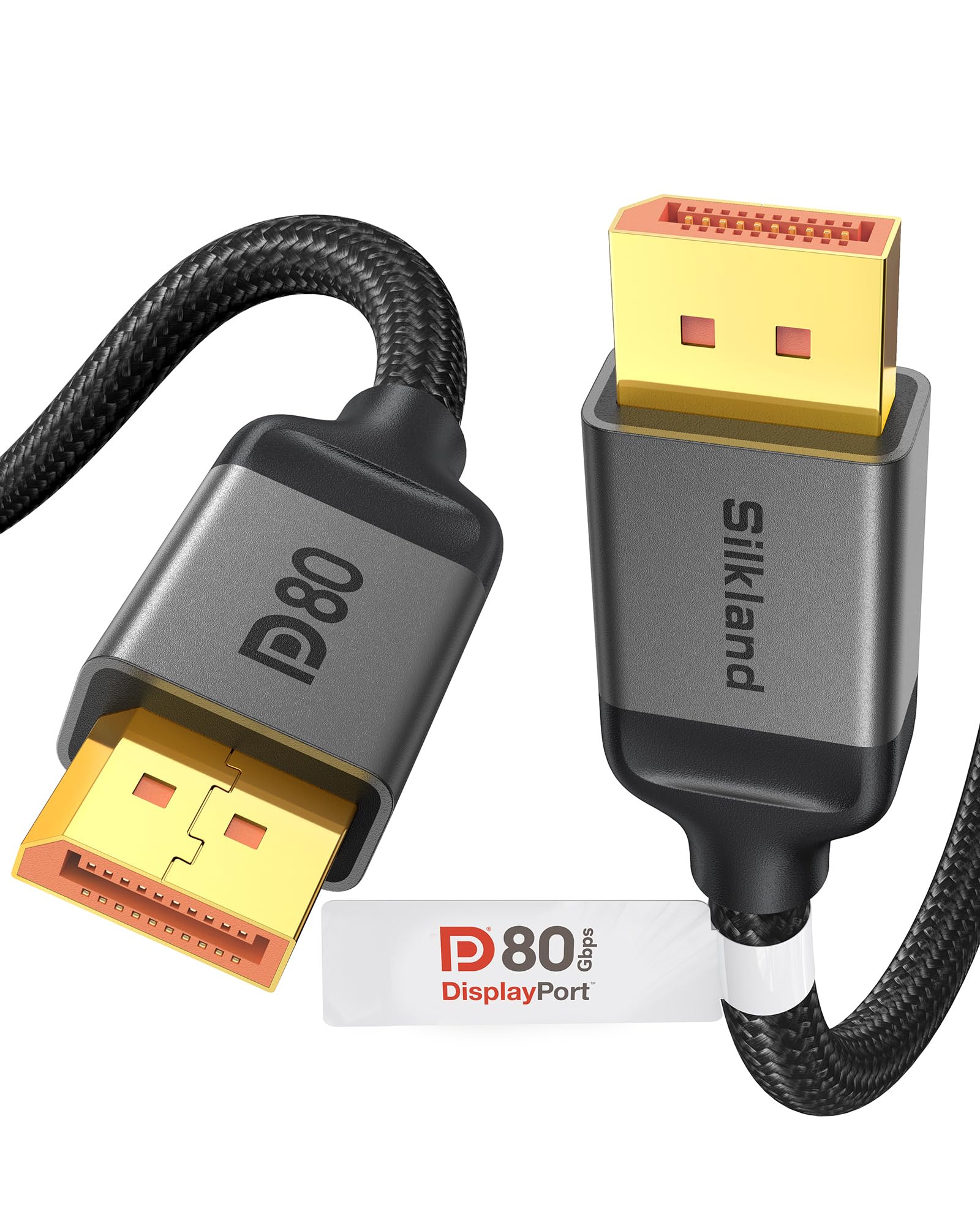
Read Amazon ReviewsSilkland 80Gbps Short DisplayPort 2.1 Cable
Choose the 10-foot cable when placement distance is a priority and its listed modes meet your setup.
Consider the 1.6-foot 80Gbps option for a close-range connection where its higher listed bandwidth and refresh modes better match compatible equipment; its short reach makes it less suitable when the display is farther away.
- The Silkland 80Gbps Short DisplayPort 2.1 Cable is 1.6 feet long and lists 80Gbps bandwidth.
- Its modes include uncompressed 4K at 240Hz and, with DSC enabled, up to 16K at 60Hz, 8K at 240Hz, and 4K at 540Hz.
- The Silkland 16K DisplayPort Cable is 10 feet long and lists 54Gbps bandwidth, with 16K at 60Hz supported using DSC.
Is Silkland DP Cable Worth It?
The Silkland 16K DisplayPort Cable is worth considering when you need a 10-foot DisplayPort connection, want backward compatibility, and have devices that support the display mode you intend to use.
Its braided build and grooved, buckle-free connectors add practical appeal for a cable routed around a desk.
Buy it for the combination of reach and listed display support, after checking both devices’ ports, resolution, refresh rate, and DSC requirements.
If your setup is close together, a shorter cable may be easier to manage; if you need maximum listed bandwidth, compare the short 80Gbps alternative against your actual hardware and cable route.
Your review at a glance
7,000+ ratings
Read Amazon ReviewsSilkland 16K DisplayPort Cable
A 10-foot DisplayPort cable for desktop users connecting compatible high-resolution monitors and graphics cards, with a braided build and broad backward compatibility.
- 10-foot, male-to-male DisplayPort cable for connecting a compatible desktop or laptop to a monitor.
- Supports up to 16K (15360 × 8640) at 60Hz with DSC, 8K at 120Hz, 4K at up to 240Hz, and 2K at 360Hz.
- Lists 54Gbps bandwidth, HBR3, DSC 1.2a, Dynamic HDR, HDCP 2.2, and 3D stereo support.
- Backward compatible with DisplayPort versions 2.0, 1.4, 1.3, 1.2, 1.2a, 1.1, and 1.0.