The Liene M100 is a dye-sublimation photo printer built around a simple routine: connect a phone to its Wi-Fi hotspot, make edits in the app, and print 4×6 photos at home.
This liene m100 photo printer review looks at how its included supplies, multi-device connection, and compact storage suit everyday snapshots.
Liene M100 Review Summary
The quick verdict
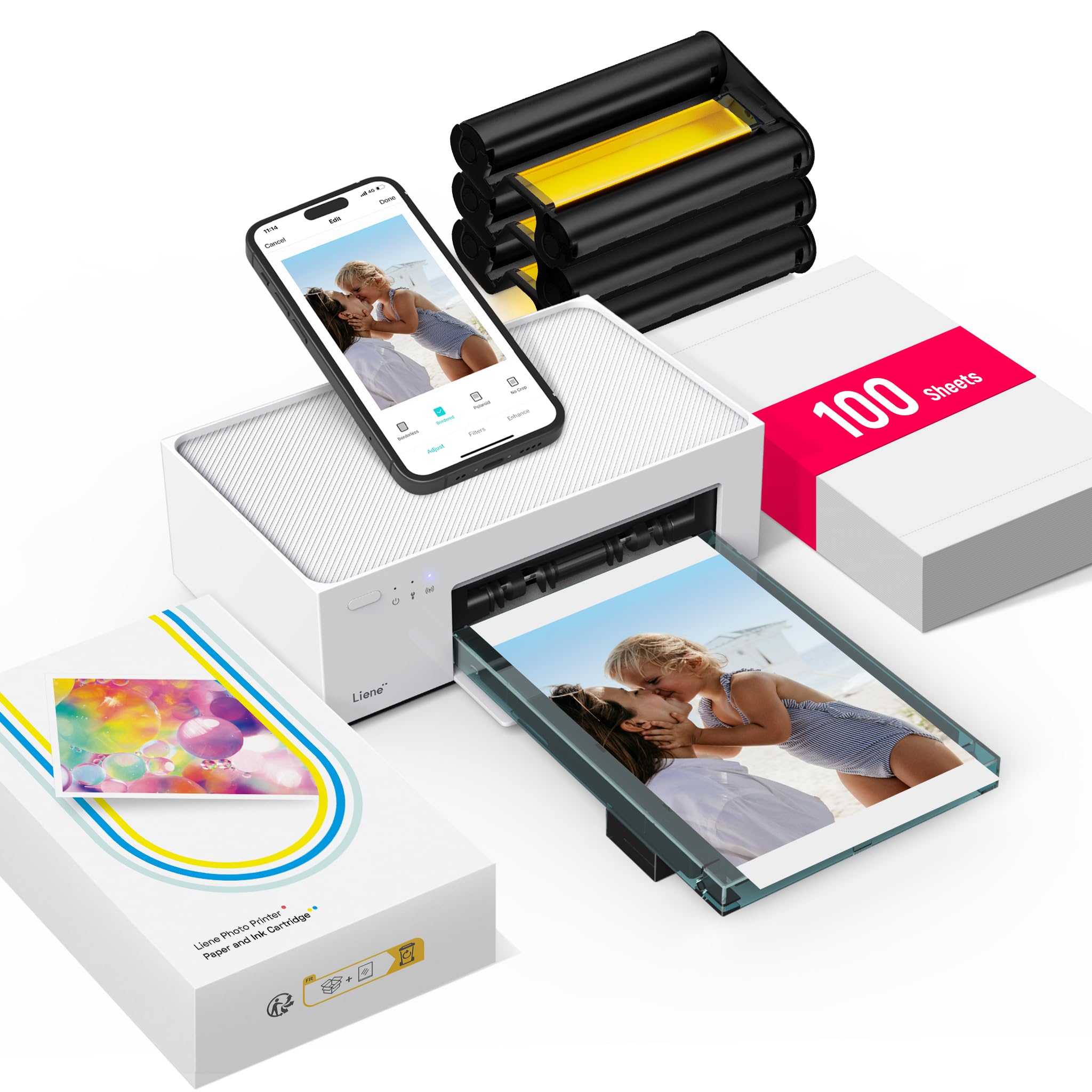
4,000+ ratings
Read Amazon ReviewsLiene M100 Photo Printer
A compact choice for households that want app-edited 4×6 prints from phones, with paper and cartridges included for getting started.
- Thermal dye-sublimation color printing on glossy 4×6-inch photo paper, with 300 × 300 resolution.
- Package includes 100 sheets of photo paper and three color cartridges.
- Built-in Wi-Fi hotspot for connecting phones without requiring another network; up to five devices can connect simultaneously.
- App tools include square borders, filters, brightness and contrast adjustments, and print-status checks.

Pros
- A generous included supply of 100 sheets and three cartridges simplifies starting out.
- Its hotspot connection supports direct phone printing without relying on an external Wi-Fi network.
Consider before buying
- A 20-sheet tray capacity means larger print sessions require reloading before all included paper is used.
- The documented maximum media size is 4×6 inches, so buyers wanting larger prints should check that this format meets their needs.
Read the full review summary
The M100’s main appeal is a ready-to-use photo-printing bundle: it includes 100 sheets of 4×6 paper and three color cartridges.
Dye-sublimation printing adds a laminated finish intended to resist water, scratches, fingerprints, and fading, making the prints a practical fit for albums, frames, or sharing.
It is designed for phone-centered printing, with an independent Wi-Fi hotspot, app-based editing, and support for up to five simultaneous device connections.
Its compact form and magnetic storage design make it easier to keep a small photo setup together, while the 20-sheet capacity means the printer is best approached as a personal or household printer rather than a high-volume station.
The buying factors
Liene M100 Scorecard
Editorial scores reflect listed features and buyer fit; they are not laboratory measurements or customer ratings.
Included paper and cartridges
The 100-sheet starter supply and three cartridges make it possible to begin printing without assembling separate consumables.
Phone connectivity
A built-in hotspot avoids relying on an outside network, and the printer supports up to five simultaneous connections.
Print finish
Dye sublimation and a laminated surface are well suited to colorful 4×6 keepsakes that may be handled.
App editing
The app offers borders, filters, contrast and brightness adjustments, plus print-status checks.
Paper capacity
A 20-sheet capacity is workable for occasional sessions but may call for more frequent reloading during larger batches.
Format flexibility
The printer handles color 4×6 photos, including borderless printing, but its described maximum media size is 4×6 inches.
Key Features and Specifications of Liene M100
- Thermal dye-sublimation color printing on glossy 4×6-inch photo paper, with 300 × 300 resolution.
- Package includes 100 sheets of photo paper and three color cartridges.
- Built-in Wi-Fi hotspot for connecting phones without requiring another network; up to five devices can connect simultaneously.
- App tools include square borders, filters, brightness and contrast adjustments, and print-status checks.
- Laminated print surface designed to resist water, scratches, fingerprints, and fading.
- Compact, minimalist design with magnetic storage; the sealed cassette helps keep dust away.
- Supports iOS, Android, Windows, and Mac devices; USB Type-C is also listed as a connection option.
Pros and Cons of Liene M100
Pros
- A generous included supply of 100 sheets and three cartridges simplifies starting out.
- Its hotspot connection supports direct phone printing without relying on an external Wi-Fi network.
- Up to five simultaneous connections can make shared household printing more convenient.
- App editing covers useful quick adjustments and decorative filters or borders.
- The laminated finish is designed for prints that may be handled or displayed.
Consider before buying
- A 20-sheet tray capacity means larger print sessions require reloading before all included paper is used.
- The documented maximum media size is 4×6 inches, so buyers wanting larger prints should check that this format meets their needs.
- Cartridges are specified as Liene proprietary, so buyers should factor compatible replenishment supplies into ongoing use.
Who Should Buy Liene M100?
Good fit
Consider the M100 if you mainly want straightforward 4×6 prints from a phone and value having paper and cartridges in the box.
Its dedicated hotspot and app workflow are useful for printing from several household devices, while the editing tools can help make quick adjustments before sending a photo.
It also suits people who want finished prints for albums, gifts, or casual display.
The laminated surface is designed to stand up to common handling marks, and the magnetic storage design can help keep the printer and paper cassette together when the device is put away.
Before choosing it, think through how often you print and how much paper you use in one sitting.
The starter supply is larger than the tray capacity, and replenishment requires compatible Liene cartridges; checking the cost and availability of those consumables for your routine can help you judge long-term value.
Who should skip it
Look elsewhere if your photo workflow depends on media larger than 4×6 inches or on feeding a large batch without pauses. The M100’s described paper capacity is 20 sheets, and its maximum media size is 4×6 inches.
It may also be a poor fit if you want to avoid app-based editing or proprietary cartridges. Confirm that the app workflow and compatible supply options suit your devices and printing habits before buying.
How the Liene M100 Fits a Home Photo Workflow
A phone-first connection
The built-in hotspot gives the printer a direct connection path for phones, avoiding dependence on a home router during printing.
Support for up to five simultaneous connections is useful when several people contribute photos, though the actual printing still happens through the app and the printer’s one-sheet-at-a-time workflow should be considered for shared sessions.
A finish for everyday keepsakes
Dye-sublimation printing builds the image through color layers and finishes it with a laminate.
The stated resistance to water, scratches, fingerprints, and fading is a design advantage for photos that will be handled, but buyers should still treat prints as keepsakes rather than assume they can withstand any conditions.
Editing before printing
The app adds practical control before a print is committed: users can apply a square border, choose filters, adjust brightness and contrast, and check printing status.
That makes the M100 more useful than a bare send-and-print device for quick personalization, though it remains focused on photo output rather than broader document tasks.
Capacity and consumables
The included 100 sheets and three cartridges offer a substantial start, but the 20-sheet capacity sets the size of each loaded batch.
Since the printer uses proprietary Liene cartridges, buyers planning frequent printing should check how readily they can replenish the right supplies and how that fits their expected volume.
Alternatives to Liene M100
Desktop Photo Printers alternative
19,000+ ratings
Read Amazon ReviewsKODAK Dock Plus 4×6 Photo Printer
Choose the M100 if a larger included paper supply and hotspot-based multi-device setup matter most. The Dock Plus is a better fit for a home station where placing and charging a phone on the printer is useful.
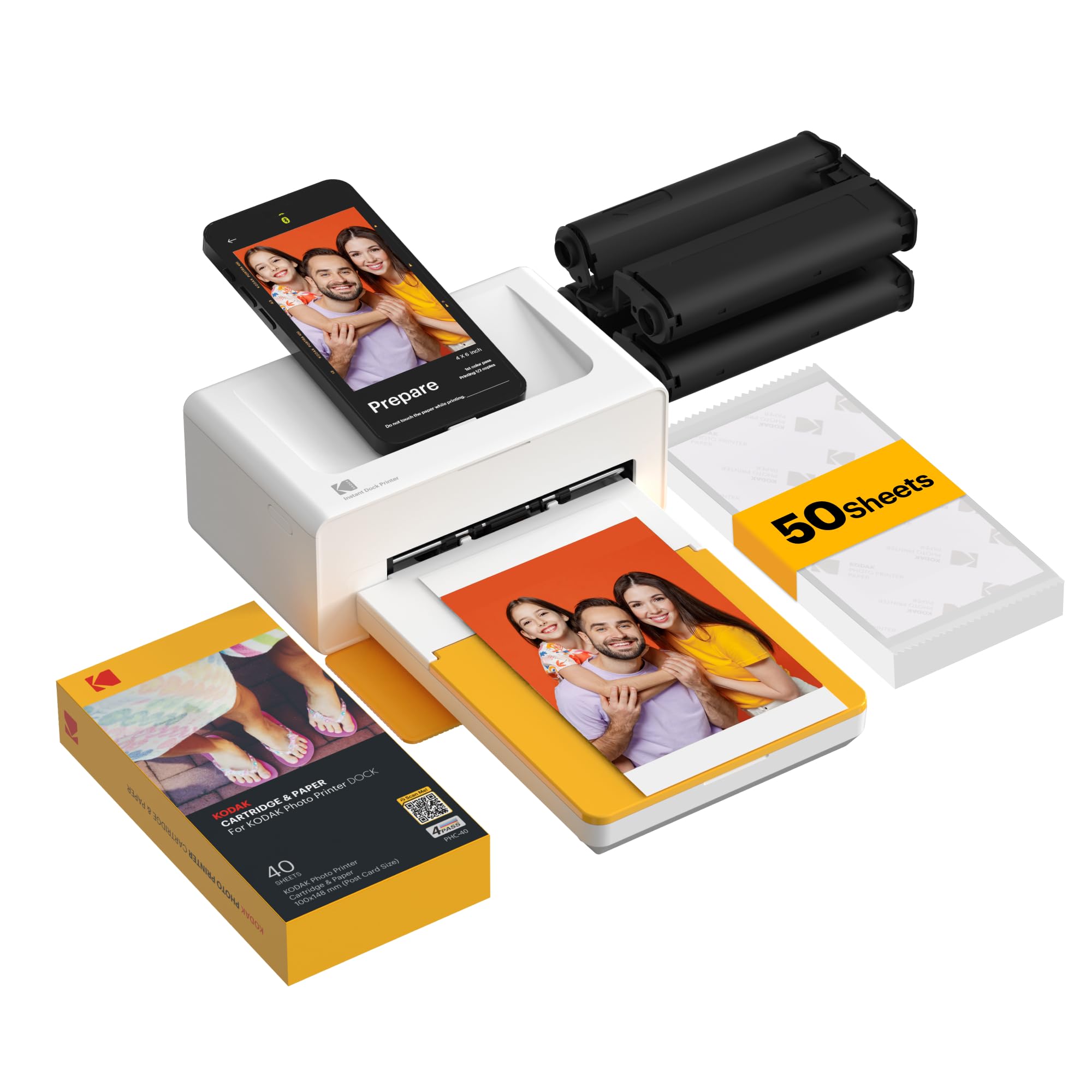
- The KODAK Dock Plus prints 4×6 photos using 4PASS dye sublimation and connects to compatible iOS and Android phones over Bluetooth.
- Its integrated docking station can hold and charge a phone during printing, and its app supports editing, cropping, and customization.
- The Liene M100 includes 100 sheets and three cartridges, connects through its own Wi-Fi hotspot, and supports up to five simultaneous connections.
Battery-focused alternative
500+ ratings
Read Amazon ReviewsLiene M200 Battery Edition
The M100 is the stronger fit when the included 100-sheet supply is the priority and printing can happen near a power source.
The M200 is worth considering when battery-powered use away from an outlet is more important; its stated per-charge limit and smaller included supply are relevant tradeoffs.
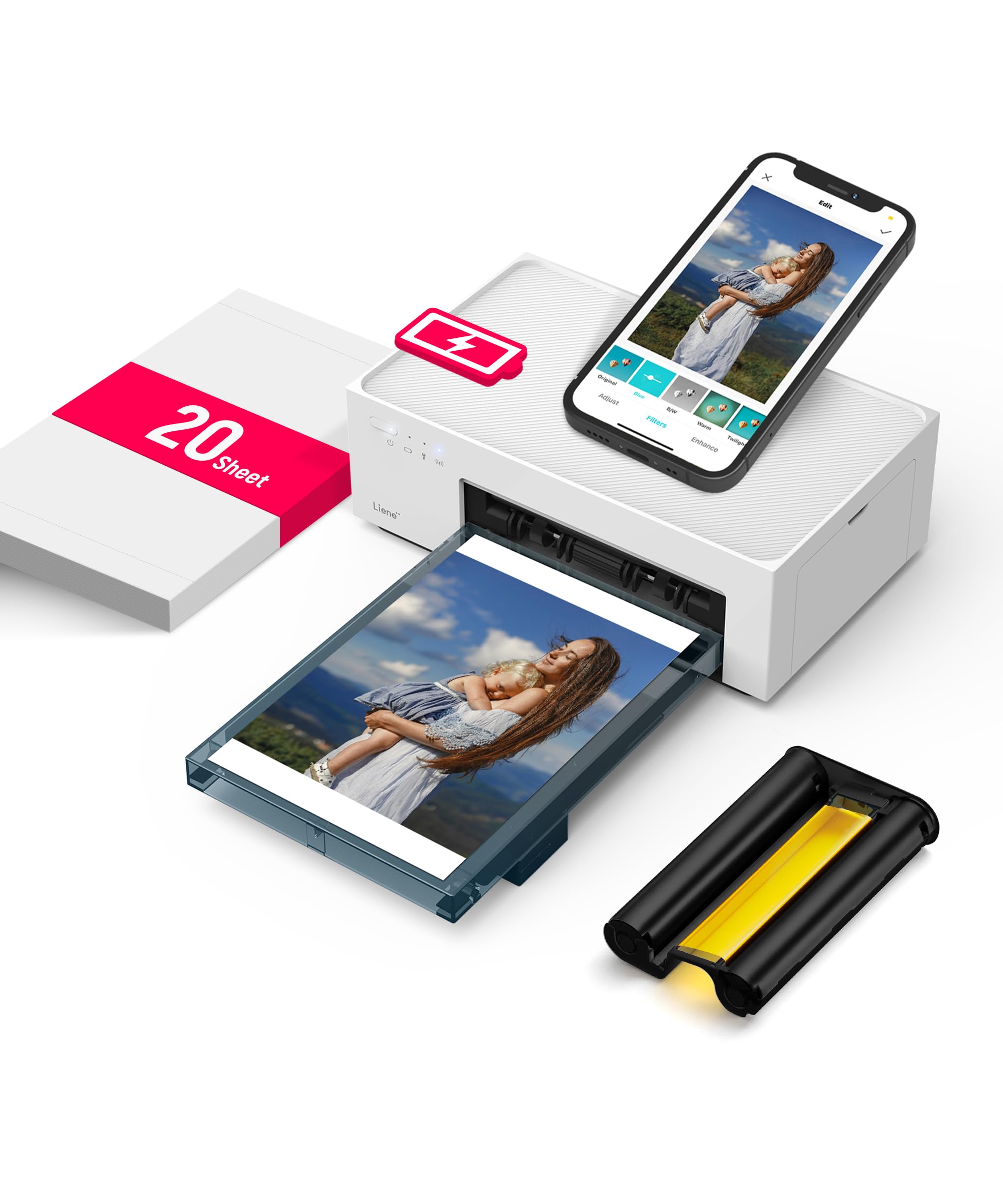
- The Liene M200 Battery Edition supports 4×6 dye-sublimation printing and includes a rechargeable built-in battery, with up to 40 prints per charge.
- It also has a Wi-Fi hotspot, supports up to five users, and includes 20 sheets and one cartridge.
- The M100 is a compact 4×6 printer with a 20-sheet capacity and a hotspot connection, with no battery-powered printing specified for this model.
Is Liene M100 Worth It?
The Liene M100 is worth considering for phone-first households that want colorful 4×6 prints, quick app edits, and a generous starter supply.
Its hotspot and support for several connected devices make shared casual printing convenient, while the laminated finish is designed for handled keepsakes.
Buy it if 4×6 is the format you need and you are comfortable with a 20-sheet capacity and proprietary cartridges.
For frequent high-volume sessions or a need for other print sizes, compare those constraints with your intended routine before deciding.
Your review at a glance
4,000+ ratings
Read Amazon ReviewsLiene M100 Photo Printer
A compact choice for households that want app-edited 4×6 prints from phones, with paper and cartridges included for getting started.
- Thermal dye-sublimation color printing on glossy 4×6-inch photo paper, with 300 × 300 resolution.
- Package includes 100 sheets of photo paper and three color cartridges.
- Built-in Wi-Fi hotspot for connecting phones without requiring another network; up to five devices can connect simultaneously.
- App tools include square borders, filters, brightness and contrast adjustments, and print-status checks.